The Architecture of Attention
Designing Spaces That Pull People In
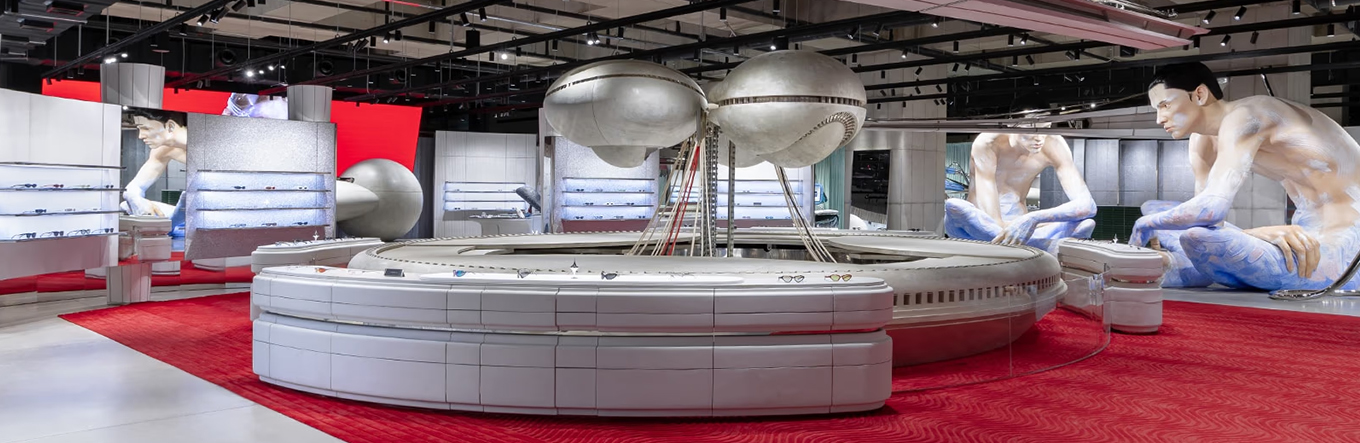
In a world filled with advertising, screens, signage, and branded environments, simply being visible is no longer enough.
Consumers move through spaces surrounded by visual information. Retail shelves compete for attention, storefronts compete for foot traffic, and brands compete to be noticed within increasingly crowded environments. When everything is designed to attract attention, the challenge is no longer simply how to be seen, but how to be worth looking at.
This is where design becomes a strategic asset.
Attention can be influenced by the way a space is shaped, the way people move through it, and what they encounter along the way. Scale can make something feel impossible to ignore. Contrast can interrupt the visual rhythm of an environment. An unexpected object can create curiosity, while lighting, materials, sound, and negative space can establish an atmosphere that draws people further in. These are the working tools of experiential retail design.
In other words, space can be designed to create a reaction.
The most effective branded environments do not simply place a logo or product in front of consumers. They create a reason to stop. They give people something unexpected to discover, something memorable to experience, or something worth sharing.
This is particularly relevant today, when the physical and digital worlds increasingly overlap. A striking retail installation does not end when someone walks out of the store. It can become a photograph, a video, a social media post, or a conversation that extends the brand experience far beyond the physical space.
Gentle Monster, Tamburins, and NUDAKE are strong examples of this approach. The three brands sit under IICOMBINED, the Seoul-based creative company behind their distinct brand worlds. While each has its own products and identity, from eyewear to fragrance and beauty, and food, they share a recognisable design philosophy: an avant-garde aesthetic, surreal retail spaces, and immersive artistic concepts.
Their environments demonstrate how physical space can move beyond being a backdrop for a product and become an active part of the brand itself.
Gentle Monster: Attention Through Spectacle
Known for its eyewear and sunglasses, Gentle Monster has become equally recognised for its unconventional retail environments.
Its stores are often filled with giant statues, oversized figures, strange characters, and otherworldly installations that feel more like art pieces than traditional retail displays.
These unexpected elements disrupt the familiar retail environment. You do not necessarily need to understand what you are looking at. You simply want to look.
The scale and surrealism create curiosity, while the installations reinforce Gentle Monster’s experimental and futuristic identity.
The space becomes part of the brand story.
Tamburins: Attention Through Atmosphere
Tamburins is a fragrance and beauty brand that takes a more atmospheric approach to spatial branding.
Its stores combine sculpture, architecture, materials, lighting, and negative space to create environments that feel more like art galleries than conventional beauty stores.
Rather than overwhelming visitors with branding, the space creates a distinct mood around the product. The environment becomes part of how consumers experience the brand.
For a sensory category like fragrance, this is particularly effective. The physical environment can communicate qualities such as sophistication, creativity, or mystery before a customer even experiences the product itself.
Here, attention comes through atmosphere and restraint.
NUDAKE: Attention Through Curiosity
NUDAKE, a food and dessert concept, blurs the boundaries between food, fashion, art, and contemporary culture.
Its spaces feature unexpected installations, unconventional displays, and experimental presentations that encourage visitors to explore the environment beyond the products themselves.
The result is a space that can become a destination, a conversation starter, and a source of shareable content.
Rather than simply asking consumers to buy something, the environment gives them a reason to visit and discover what the brand is doing next.
The experience becomes part of what people come for.
Three Approaches, One Purpose
While their design languages are different, all three brands understand an important principle:
Physical space can be a powerful brand communication tool.
Gentle Monster uses spectacle. Tamburins uses atmosphere. NUDAKE uses curiosity.
But each creates an environment that gives consumers a reason to stop and engage.
Spectacle, atmosphere and curiosity compared
This is what makes these examples relevant beyond retail. Their success is not simply about having visually impressive stores. It comes from understanding that the environment itself can communicate brand values.
The space can tell consumers whether a brand is experimental, sophisticated, playful, artistic, disruptive, or unconventional, often without saying a word.
Why This Matters for Brands
Attention is not valuable simply because someone looked.
The real value comes from what happens next. The same principle governs digital environments, where cognitive ease decides whether a shopper acts on what they have noticed.
What a well-designed retail space can do
A well-designed space can help a brand:
- Stand out in visually crowded environments
- Communicate identity beyond logos and traditional brand assets
- Increase engagement by encouraging people to explore
- Create memorable experiences that strengthen brand recall
- Generate social content through visually distinctive environments
- Differentiate the brand through experience, not just product
Where physical space sits in the brand ecosystem
The physical environment can therefore become another touchpoint within the overall brand ecosystem.
A customer may first encounter the brand through an advertisement, discover it through social media, experience it inside a store, and later share that experience online.
When the physical space is distinctive enough, it becomes part of that larger conversation.
From Retail to Experiential Marketing
The same principles can be applied beyond flagship stores, to activation booths, pop-ups, exhibitions, festivals, events, and branded installations.
Four questions to ask before you design an activation
The scale may change, but the questions remain the same:
What will make someone stop?
What will make them curious?
How will the space guide their experience?
What will they remember when they leave?
An activation does not necessarily need to be the biggest structure in the space. It needs to create something unexpected enough to interrupt the environment around it.
A simple footprint can still create impact through scale, contrast, movement, materiality, interaction, or a strong visual idea. This is the thinking behind our own activation work for brands such as Heineken Silver and Amstel Sports Centraal, where the concept has to carry the space rather than the budget.
The goal is not to create disruption for its own sake. It is to create intentional disruption, something that breaks the expected pattern of the environment and gives people a reason to engage with the brand.
Designing for Attention, Not Just Visibility
The future of physical brand experiences is not necessarily about making spaces bigger, louder, or more crowded.
It is about making them more intentional.
Gentle Monster shows how spectacle and scale can stop people in their tracks. Tamburins demonstrates how atmosphere and restraint can create emotional connections. NUDAKE shows how culture and curiosity can turn a physical space into a destination.
Different approaches, but the same underlying idea:
The space can become the message.
When brands design environments that people want to experience, photograph, explore, and remember, they create something far more valuable than a display.
They create a physical expression of the brand that can live in the consumer’s memory long after they leave.
Because the goal is not simply to be seen.
It is to be experienced, and remembered.
Frequently Asked Questions
What is experiential retail design?
Experiential retail design is the practice of shaping a physical retail environment so that the space itself communicates the brand, rather than acting as a neutral container for products. It uses scale, contrast, lighting, materials, sound and negative space to create a reaction in the visitor, encouraging them to stop, explore and remember.
What is the difference between visibility and attention in retail design?
Visibility means a brand is present and can be seen. Attention means a person actively chooses to stop and look. In crowded environments, most brands achieve visibility and very few achieve attention. The difference is usually created by something unexpected, such as scale, contrast or an installation that interrupts the visual pattern of the space.
Do Gentle Monster, Tamburins and NUDAKE share a parent company?
Yes. All three brands sit under IICOMBINED, a Seoul-based creative company founded in 2011. Gentle Monster works in eyewear, Tamburins in fragrance and beauty, and NUDAKE in food and dessert. Despite operating in different categories, they share an avant-garde aesthetic, surreal retail spaces and immersive artistic concepts.
Why is Gentle Monster’s store design so effective?
Gentle Monster’s stores use spectacle and scale, filling retail space with oversized figures, sculptural characters and installations that read as art rather than merchandising. The unfamiliarity is the point. Visitors do not need to interpret the work to be drawn to it, and the surrealism reinforces the brand’s experimental and futuristic identity.
Can smaller brands apply experiential retail principles on a limited budget?
Yes. Impact comes from the idea rather than the footprint. A small activation can create the same interruption through contrast, movement, materiality, interaction or a single strong visual concept. The question is not how large the structure is, but how clearly it breaks the expected pattern of the surrounding environment.
How do you measure the return on a branded environment or brand activation?
Look beyond footfall alone. Useful indicators include dwell time in the space, the proportion of visitors who photograph or film it, organic social mentions and user-generated content, branded search volume during and after the activation, and shifts in brand recall. Sales lift is one measure, but the environment often works further up the funnel.
What makes a brand activation memorable?
Memorability usually comes from intentional disruption rather than volume. The most memorable activations answer four questions clearly: what makes someone stop, what makes them curious, how the space guides their experience, and what they take away when they leave. A space that answers all four tends to be remembered and shared long after the event ends.
Sources and further reading
- IICOMBINED brand portfolio and Haus Nowhere retail concept, Inside Retail Asia
- Gentle Monster corporate background and parent company structure, WWD
- Gentle Monster retail strategy in China, Daxue Consulting
About Me